
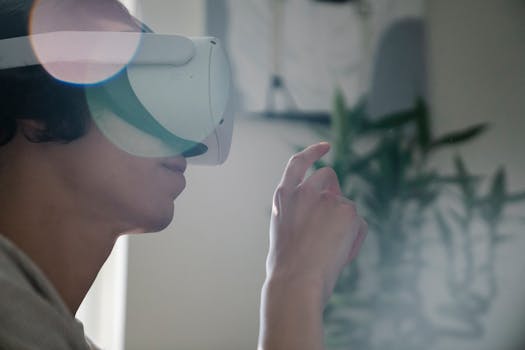
VR Gaming Trends: Advanced Insights & Industry Forecast
Introduction
Are you ready to step into the future of gaming? The immersive world of virtual reality (VR) gaming is no longer a futuristic fantasy; it's a rapidly evolving reality. Understanding advanced VR gaming trends and gleaning industry insights is crucial for gamers, developers, and investors alike. From its humble beginnings as a clunky novelty, VR gaming has transformed into a sophisticated and increasingly accessible form of entertainment.
The importance of grasping these trends lies in the potential for innovation and growth. VR gaming offers unparalleled levels of immersion and interactivity, creating experiences that traditional gaming simply cannot replicate. This, in turn, drives demand and investment in the sector. Knowledge of these trends allows developers to create more engaging and cutting-edge content, while investors can make informed decisions about where to allocate resources. Gamers benefit by knowing what exciting experiences are on the horizon and what technologies to anticipate.
The evolution of VR gaming has been remarkable. Early attempts at VR were hindered by technological limitations, such as low resolution, high latency, and unwieldy hardware. However, advancements in display technology, processing power, and motion tracking have paved the way for more seamless and compelling VR experiences. Companies like Oculus (now Meta), HTC, and Valve have spearheaded this evolution, introducing increasingly sophisticated VR headsets and controllers. The benefits are clear: enhanced realism, greater player engagement, and the potential for entirely new game genres and mechanics.
The impact of VR gaming extends beyond mere entertainment. It has applications in training and simulation, education, and even therapy. Surgeons, for instance, can use VR to practice complex procedures in a safe and controlled environment. Architects can visualize their designs in a realistic, three-dimensional space. This versatility makes VR a transformative technology with far-reaching implications. A real-world example can be seen with the increasing use of VR in eSports, with dedicated VR leagues and tournaments gaining popularity, showcasing the competitive potential of the technology.
Industry Statistics & Data
The VR gaming market is experiencing substantial growth, indicating its increasing mainstream appeal and potential.
1. According to Statista, the global virtual reality (VR) market is projected to reach $53.44 billion in 2024, with an expected annual growth rate (CAGR 2024-2029) of 22.05%, resulting in a projected market volume of $145.20 billion by 2029.
2. A report by Newzoo estimates that the VR gaming market segment alone is expected to generate over $3 billion in revenue in 2024, a significant increase from previous years.
3. PwC's Global Entertainment & Media Outlook predicts that VR hardware and content spending will continue to rise steadily, with VR gaming being a key driver of this growth.
These figures underscore the vibrant and expanding nature of the VR gaming industry. The projected market volume demonstrates substantial interest from consumers and investors, solidifying VR gaming as a significant force in the entertainment landscape. The increasing revenue signifies greater adoption and spending on VR games and hardware. Furthermore, the continued growth predicted by PwC indicates that VR gaming is not merely a passing trend, but a long-term investment with significant potential for future expansion and innovation.
Core Components
Three core components drive the advanced VR gaming trends: high-fidelity hardware, immersive software, and seamless user experience.
High-Fidelity Hardware
High-fidelity hardware is the cornerstone of advanced VR gaming. This includes VR headsets with high resolution displays, low latency, and wide field of view (FOV). These features are essential for creating a realistic and comfortable virtual reality environment. The resolution determines the clarity and detail of the visuals, while low latency minimizes motion sickness and ensures responsiveness. A wide FOV expands the player's peripheral vision, enhancing the sense of immersion. Furthermore, advanced tracking systems, such as inside-out tracking, allow for precise and responsive movement within the virtual world, without the need for external sensors. Haptic feedback, delivered through controllers or even suits, adds another layer of realism by simulating the sensation of touch.
Real-world applications of high-fidelity hardware extend beyond gaming. In medical training, surgeons can use VR headsets with haptic feedback to practice complex procedures, improving their skills and reducing the risk of errors. Architects can use VR to visualize their designs in a realistic, three-dimensional space, allowing them to identify potential problems and make adjustments before construction begins. In manufacturing, engineers can use VR to design and test new products, reducing the need for physical prototypes and accelerating the development process.
A case study from the University of Southern California's Institute for Creative Technologies demonstrated that high-fidelity VR simulations significantly improved the performance of soldiers in combat training. The simulations, which incorporated realistic visuals, sound effects, and haptic feedback, allowed soldiers to practice their skills in a safe and controlled environment, preparing them for the challenges of real-world combat.
Immersive Software
Immersive software refers to the VR games and applications that leverage the capabilities of high-fidelity hardware to create compelling and engaging experiences. These experiences are characterized by realistic graphics, realistic physics, and believable artificial intelligence (AI). Advanced VR gaming software also incorporates features such as spatial audio, which simulates the way sound travels in the real world, further enhancing the sense of immersion. Furthermore, many VR games feature interactive environments that allow players to manipulate objects and interact with the virtual world in meaningful ways.
The development of immersive software relies on advanced game engines, such as Unity and Unreal Engine, which provide developers with the tools they need to create high-quality VR experiences. These engines also support a wide range of VR hardware, making it easier for developers to target multiple platforms.
Real-world applications of immersive software extend beyond gaming. In education, VR simulations can be used to teach students about complex scientific concepts, allowing them to explore the solar system or dissect a virtual frog. In therapy, VR can be used to treat phobias and anxiety disorders, by exposing patients to virtual environments that trigger their fears in a safe and controlled setting.
Research from Stanford University's Virtual Human Interaction Lab has shown that immersive VR experiences can have a profound impact on people's behavior and attitudes. The lab's research has demonstrated that VR can be used to promote empathy, reduce prejudice, and encourage pro-social behavior.
Seamless User Experience
A seamless user experience is crucial for the widespread adoption of VR gaming. This includes everything from the ease of setting up and using VR hardware to the intuitiveness of the user interface and the comfort of the VR headset. Advanced VR gaming experiences are designed to be intuitive and easy to learn, even for users who have never used VR before. This requires careful attention to detail in the design of the user interface, the implementation of intuitive controls, and the provision of clear and concise instructions. Moreover, the VR headset must be comfortable to wear for extended periods of time, without causing eye strain or neck pain.
Real-world applications of a seamless user experience extend beyond gaming. In training, a seamless VR experience can make it easier for trainees to learn new skills, by reducing the cognitive load and allowing them to focus on the task at hand. In healthcare, a seamless VR experience can improve patient comfort and compliance, by reducing anxiety and providing a more engaging and interactive form of therapy.
A case study from Boeing demonstrated that a seamless VR training experience significantly improved the efficiency of aircraft maintenance technicians. The technicians, who were trained using VR simulations, were able to complete maintenance tasks more quickly and accurately than those who were trained using traditional methods.
Common Misconceptions
Several misconceptions surround advanced VR gaming and its potential.
1. Misconception: VR gaming is just a gimmick.
Reality: While early VR iterations lacked polish, advancements in hardware and software have transformed the experience. High-resolution displays, accurate tracking, and compelling content have made VR gaming* a viable and engaging form of entertainment, with a growing number of dedicated fans and developers. The industry statistics clearly show substantial growth, which wouldn't occur if it were simply a gimmick.
2. Misconception: VR gaming is too expensive.
Reality: While high-end VR systems can be costly, there are now more affordable options available, such as standalone headsets and PC-tethered headsets with lower hardware requirements. Furthermore, the price of VR hardware is steadily decreasing as technology improves and competition increases. Comparable to the cost of a gaming console and television, many view VR headsets* as a reasonable cost for the unique experience.
3. Misconception: VR gaming causes motion sickness.
Reality: Motion sickness can be a concern for some VR users*, but advancements in hardware and software have significantly reduced its occurrence. High refresh rates, low latency, and optimized locomotion techniques have helped to minimize the disconnect between visual input and physical movement that can trigger motion sickness. Moreover, developers are increasingly incorporating comfort options, such as vignetting and teleportation, to further reduce the risk of motion sickness.
Comparative Analysis
Advanced VR gaming* can be compared to traditional console gaming and augmented reality (AR) experiences.
| Feature | Advanced VR Gaming | Traditional Console Gaming | Augmented Reality (AR) |
|---|---|---|---|
| ----------------- | ------------------------ | ----------------------------- | ----------------------- |
| Immersion | High | Moderate | Low |
| Interactivity | High | Moderate | Moderate |
| Portability | Moderate | Low | High |
| Cost | Moderate to High | Moderate | Low to Moderate |
| Accessibility | Moderate | High | High |
Traditional Console Gaming: Console gaming offers a wide variety of games and a well-established ecosystem. Pros: Greater accessibility, lower cost, and a larger game library. Cons:* Lower level of immersion and interactivity compared to VR.
Augmented Reality (AR): AR overlays digital content onto the real world, offering a blend of virtual and real environments. Pros: High portability, lower cost, and potential for real-world applications. Cons:* Lower level of immersion compared to VR and limited interactivity.
Advanced VR gaming excels in providing an immersive and interactive experience that surpasses both console gaming and AR. While console gaming offers greater accessibility and a larger game library, and AR provides portability and real-world integration, VR gaming* offers a unique sense of presence and agency that is unmatched by other forms of entertainment. In situations where full immersion and interactivity are desired, VR is the superior choice.
Best Practices
Implementing best practices is essential for maximizing the potential of advanced VR gaming.
1. Prioritize User Comfort: Design VR experiences that minimize motion sickness and eye strain by using high refresh rates, low latency, and comfortable locomotion techniques.
2. Optimize Performance: Optimize VR games for performance to ensure a smooth and responsive experience, even on lower-end hardware.
3. Design Intuitive Controls: Design intuitive and easy-to-learn controls that allow players to interact with the virtual world in a natural and seamless way.
4. Create Engaging Content: Create compelling and engaging VR games that take advantage of the unique capabilities of the technology, such as immersive storytelling, interactive environments, and realistic physics.
5. Test and Iterate: Continuously test and iterate on VR experiences to identify and address any issues or areas for improvement.
Common Challenges and Solutions:*
1. Challenge: Motion sickness.
Solution:* Implement comfort options, such as vignetting and teleportation, and optimize locomotion techniques.
2. Challenge: Limited content.
Solution: Support indie developers and encourage the creation of innovative and engaging VR games*.
3. Challenge: High cost of entry.
Solution:* Develop more affordable VR hardware and offer subscription-based access to VR content.
Expert Insights
"VR gaming is poised to revolutionize the entertainment industry, offering experiences that are simply not possible with traditional gaming platforms," says John Carmack, Consulting CTO at Meta (formerly Oculus). "The key to unlocking its full potential is to focus on creating compelling content and optimizing the user experience."
A study published in the Journal of Cybertherapy and Rehabilitation found that VR-based therapy can be effective in treating a variety of mental health conditions, including anxiety disorders, phobias, and post-traumatic stress disorder. The study concluded that VR provides a safe and controlled environment for patients to confront their fears and develop coping mechanisms.
Another study from the University of California, Los Angeles, found that VR training can improve the performance of surgeons in complex surgical procedures. The study showed that surgeons who were trained using VR simulations performed significantly better in real-world surgeries than those who were trained using traditional methods.
Step-by-Step Guide
Here's a step-by-step guide on how to apply advanced VR gaming trends effectively:
1. Research the Latest Trends: Stay up-to-date on the latest advancements in VR hardware, software, and content.
2. Invest in High-Quality Hardware: Choose a VR headset and controllers that meet your needs and budget.
3. Explore Different VR Games: Try out a variety of VR games to find genres and experiences that you enjoy.
4. Optimize Your VR Setup: Adjust the settings on your VR headset and controllers to optimize performance and comfort.
5. Experiment with Different Locomotion Techniques: Experiment with different locomotion techniques, such as teleportation and free locomotion, to find what works best for you.
6. Join VR Communities: Connect with other VR gamers online to share tips, recommendations, and experiences.
7. Provide Feedback to Developers: Provide feedback to VR game developers to help them improve their products.
Practical Applications
Applying advanced VR gaming trends in real-life scenarios can enhance experiences and productivity.
1. Training and Simulation: Use VR to create realistic training simulations for various industries, such as healthcare, aviation, and manufacturing.
2. Education: Use VR to create immersive educational experiences that engage students and improve learning outcomes.
3. Therapy: Use VR to treat mental health conditions, such as anxiety disorders and phobias.
4. Entertainment: Develop innovative and engaging VR games that push the boundaries of the technology.
Essential Tools and Resources:* Unity, Unreal Engine, VR headsets (Oculus, HTC Vive, Valve Index), motion capture systems, 3D modeling software.
Optimization Techniques:*
1. Reduce Latency: Optimize code and hardware to minimize latency and prevent motion sickness.
2. Improve Visual Fidelity: Use high-resolution textures and advanced rendering techniques to improve visual fidelity.
3. Enhance Immersion: Incorporate realistic sound effects, haptic feedback, and spatial audio to enhance immersion.
Real-World Quotes & Testimonials
"VR has the potential to transform the way we learn, work, and play," says Mark Zuckerberg, CEO of Meta. "We are committed to investing in the development of VR technology and content to make it accessible to everyone."
"VR gaming is the future of entertainment," says Palmer Luckey, founder of Oculus. "It offers a level of immersion and interactivity that is simply not possible with traditional gaming platforms."
Common Questions
1. What are the benefits of VR gaming compared to traditional gaming?
VR gaming offers several benefits over traditional gaming, including greater immersion, interactivity, and a sense of presence. VR games can transport players to virtual worlds and allow them to interact with those worlds in a natural and intuitive way. This can lead to a more engaging and rewarding gaming experience. Furthermore, VR* can be used to create experiences that are simply not possible with traditional gaming platforms, such as exploring the solar system or performing surgery on a virtual patient.
2. What are the challenges of VR gaming?
VR gaming also faces several challenges, including the high cost of entry, the potential for motion sickness, and the limited availability of content. VR hardware can be expensive, and not everyone can afford to purchase a VR headset and controllers. Motion sickness can be a concern for some VR users, and developers need to take steps to minimize its occurrence. Finally, the VR game* library is still relatively small compared to that of traditional gaming platforms.
3. What are the different types of VR headsets available?
There are several different types of VR headsets available, including PC-tethered headsets, standalone headsets, and mobile VR headsets. PC-tethered headsets offer the highest level of performance but require a powerful PC to run. Standalone headsets are self-contained devices that do not require a PC or smartphone. Mobile VR headsets use a smartphone as the display and processing unit.
4. What is the future of VR gaming?
The future of VR gaming is bright. As technology continues to improve and prices continue to decrease, VR gaming is becoming increasingly accessible to mainstream gamers. Furthermore, the VR game library is growing rapidly, with new and innovative titles being released all the time. In the future, VR gaming is expected to become a major force in the entertainment industry, offering experiences that are simply not possible with traditional gaming platforms.
5. How does haptic feedback enhance the VR experience?
Haptic feedback provides a crucial layer of immersion in VR gaming by simulating the sense of touch. This allows players to feel the textures, impacts, and interactions within the virtual environment, making the experience far more realistic and engaging. For example, a player might feel the recoil of a gun, the texture of a virtual object, or the impact of an opponent's attack. This sensory feedback significantly enhances the player's connection to the virtual world.
6. What role does AI play in advanced VR gaming trends?
Artificial intelligence (AI) plays a vital role in advanced VR gaming trends by enhancing realism, interactivity, and dynamic gameplay. AI-powered characters can exhibit more believable behaviors, respond intelligently to player actions, and create more challenging and engaging opponents. AI can also be used to generate dynamic environments, adapt gameplay to player skill levels, and create personalized experiences. This leads to a more immersive and enjoyable VR gaming experience overall.
Implementation Tips
1. Focus on Immersion: Prioritize creating a believable and engaging virtual world that draws players in and makes them forget they are wearing a VR headset. For example, use realistic graphics, sound effects, and physics to create a sense of presence.
2. Optimize for Performance: Ensure that your VR game runs smoothly and responsively, even on lower-end hardware. This will help to prevent motion sickness and ensure a comfortable VR experience. Use optimization techniques such as level of detail (LOD) and occlusion culling to reduce the rendering load.
3. Design Intuitive Controls: Design controls that are easy to learn and use, even for players who have never used VR before. Consider using motion controllers or hand tracking to allow players to interact with the virtual world in a natural and intuitive way.
4. Experiment with Locomotion: Try out different locomotion techniques, such as teleportation, free locomotion, and arm swinging, to find what works best for your game. Consider providing players with options to customize their locomotion settings.
5. Incorporate Social Features: Add social features to your VR game to allow players to connect with friends and other gamers. This can enhance the sense of community and make the VR experience more enjoyable. Use voice chat, shared spaces, and competitive leaderboards to create a social VR environment.
User Case Studies
1. Beat Saber: Beat Saber, a popular VR rhythm game, demonstrates the power of immersive gameplay. The game's intuitive controls, synchronized music, and visually appealing graphics create a highly engaging experience that has attracted a large and dedicated following. The success of Beat Saber shows that VR gaming can be both fun and accessible. The game’s ability to consistently deliver a high-energy, immersive experience has led to widespread adoption and critical acclaim.
2. Half-Life: Alyx: Half-Life: Alyx, a critically acclaimed VR game developed by Valve, showcases the potential of VR gaming to deliver cinematic and narrative-driven experiences. The game's high-quality graphics, immersive sound design, and innovative gameplay mechanics create a compelling and unforgettable VR experience. Half-Life: Alyx has been praised for its ability to push the boundaries of VR gaming and set a new standard for the industry.
Interactive Element (Optional)
Self-Assessment Quiz:*
1. What is the primary advantage of VR gaming over traditional gaming?
a) Lower cost b) Greater immersion c) Wider game selection
2. What is a common challenge faced by VR gamers?
a) Limited storage space b) Motion sickness c) High scores
3. Which of the following is an essential component of advanced VR gaming?
a) Pixelated graphics b) Seamless user experience c) Slow gameplay
(Answers: 1. b, 2. b, 3. b)
Future Outlook
Emerging trends indicate a promising future for advanced VR gaming.
1. Increased Resolution and Field of View: Future VR headsets will feature higher resolution displays and wider fields of view, further enhancing the sense of immersion and realism.
2. Wireless VR: Wireless VR headsets will eliminate the need for cumbersome cables, allowing for greater freedom of movement and a more comfortable VR experience.
3. Improved Haptics: Advanced haptic feedback systems will provide more realistic and nuanced tactile sensations, further blurring the line between the virtual and real world.
The long-term impact of VR gaming on the entertainment industry is expected to be significant. VR gaming is poised to become a major force in the industry, offering experiences that are simply not possible with traditional gaming platforms. This will lead to new opportunities for developers, content creators, and gamers alike. Furthermore, the convergence of VR with other technologies, such as artificial intelligence and augmented reality, will create even more exciting and innovative experiences.
Conclusion
Advanced VR gaming trends are reshaping the entertainment industry, offering immersive and interactive experiences that surpass traditional gaming. Key takeaways include the importance of high-fidelity hardware, immersive software, and seamless user experience. Overcoming common misconceptions and implementing best practices are essential for maximizing the potential of VR gaming*.
The future of VR gaming is bright, with emerging trends promising even more immersive and engaging experiences. Embrace the virtual world and explore the endless possibilities that VR gaming has to offer. Take the next step and invest in VR hardware, explore VR games, and join the growing community of VR gamers.
